Learn Portuguese online: how to speak Portuguese from day one
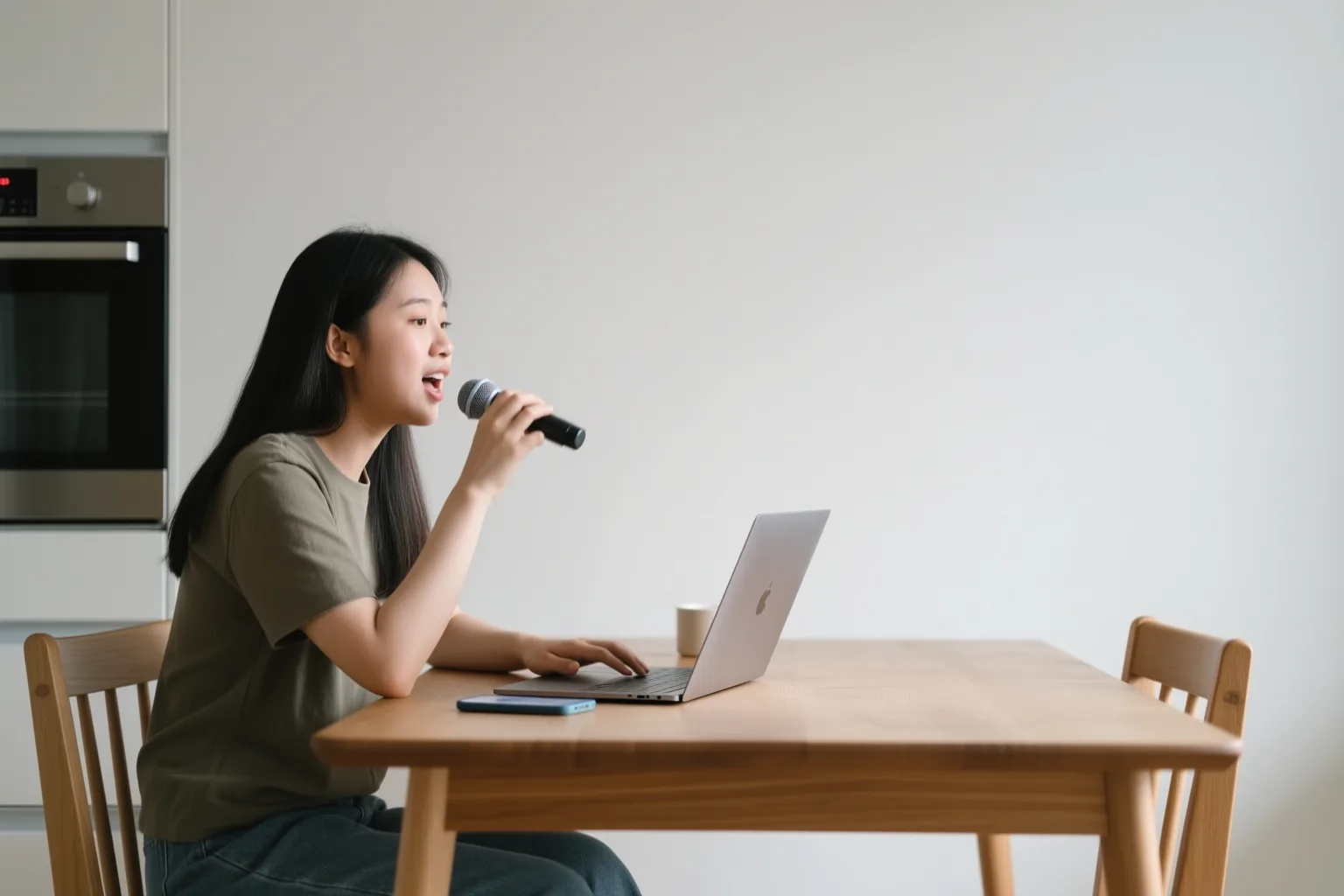
You learn Portuguese by speaking Portuguese: out loud, a few minutes a day, about your own life, with someone who answers back. Apps that only tap screens and grammar drills that only fill blanks leave the speaking muscle untrained. The gap between understanding Portuguese and saying it closes the same way for everyone — by saying things badly, hearing them said well, and trying again tomorrow.
Why most online Portuguese courses stall at reading
You finish a module, you recognize the words in a Lisbon street sign, and then a waiter asks o que vai querer? and your mind goes blank. Recognition is not production. Every sentence you have read but never spoken is a sentence you still cannot say. The fix is not more input — it is output, corrected, repeated, daily.
Three things move the needle, and none of them is another vocabulary list:
- Speaking out loud, because the mouth and the ear have to practice together.
- Getting a reply, because a reply is the only proof you were understood.
- Doing it often, because the nerves come back after a few silent days.
How to practice Portuguese speaking online, alone
You do not need a classroom to start. In this order:
- Narrate your day in Portuguese. Estou a fazer café. Agora vou tomar duche. It feels odd for two days and then it becomes automatic — exactly the reflex you need in a real conversation.
- Shadow real speakers. Take a Portuguese podcast or a RTP clip, pause after each sentence, and repeat it with the same rhythm and melody. European Portuguese swallows vowels; Brazilian Portuguese opens them. Shadowing teaches your mouth the difference faster than any pronunciation guide.
- Answer a question for a full minute. O que fizeste no fim de semana? Speak without stopping. When a word is missing, describe around it — a coisa para cortar pão instead of switching to English.
- Find someone who answers back. A tutor, an exchange partner, a voice partner that replies in real time. Steps one to three prepare you; step four is the practice itself.
What a good Portuguese conversation partner does
Human or not, the same four things matter:
- Voice. Chatting by text trains typing, not speaking.
- Correction inside the reply. You say eu tenho ido lá, the reply comes back with ah, quando foste?, and you hear the right form without losing the thread.
- Your topics, not a script. Role-plays at the hotel reception run dry in a week. Your own life does not.
- No appointment. The practice you actually do is the one you can start right now, for five minutes, without booking anything.
European or Brazilian Portuguese — pick one and stay consistent
The grammar is the same; the sound, the vocabulary, and the rhythm are not. Comboio in Portugal is trem in Brazil. Facto vs fato. Estou a comer vs estou comendo. Choose the variety that matches your goal — Lisbon, Porto, São Paulo, Rio — and stick with it. Mixing them mid-sentence sounds like a tourist who learned from two different apps.
Practicing Portuguese with a Langel
Langels is a voice conversation partner: you choose a Language Angel and talk to her out loud, in real time, with no camera and no classroom. For Portuguese that is Inês, from Portugal. Every Langel has a dial from Talk to me to Teach me: a coffee-table chat where your mistakes come back corrected inside her reply, or a proper lesson with materials on screen, and you can turn it mid-conversation. She remembers what you told her last time, so each session picks up where you left off, and five minutes is enough. Langels opens by invitation; if you don't know anyone inside, you can request a seat from Inês's page.
Frequently asked questions
How can I practice Portuguese speaking online by myself?
Narrate your day out loud in Portuguese, shadow real speech sentence by sentence, and answer everyday questions for a full minute without stopping. These build fluency without a partner. Add someone who replies as soon as you can, because a reply is the only feedback that tells you whether you were understood.
How many minutes a day should I speak Portuguese?
Five to ten minutes every day beats an hour once a week. What you are training is the reflex of starting to speak without fear, and that reflex fades after a few silent days.
Is European Portuguese harder than Brazilian Portuguese?
They are different, not harder. European Portuguese reduces vowels and speaks faster; Brazilian Portuguese opens vowels and sings more. Pick the one you will actually use and stay consistent — switching mid-stream confuses your ear and your mouth.
Do I need a native speaker to practice Portuguese conversation?
A native speaker gives you natural rhythm, everyday words, and the cultural cues textbooks skip. But what matters most is that your partner answers in real time, lets you talk about your own life, and corrects you without stopping the conversation.

Related guides
- What is an AI English tutor and how a Langel differs (voice, dialect, memory)An AI English tutor chats in text; a Langel speaks with you in real time, picks a dialect, remembers your last conversation, and corrects inside her reply.
- AP Spanish conversation practice: how to prepare for the speaking tasks out loudAP Spanish conversation practice is timed, spoken and unscripted. How to train the simulated conversation daily, alone or with a partner who answers.
- English conversation practice: how to speak English every day, not somedayEnglish conversation practice works spoken, short and daily. How to practice speaking English alone, and how to get real replies when nobody is around.