How to Say the Color Purple in Spanish — Pronunciation & Practice
The everyday Spanish word for purple is morado (moh-RAH-doh). You'll also hear violeta (bee-oh-LEH-tah) for the bluer shade, and púrpura (POOR-poo-rah) in formal or historical contexts. All three are common; morado is the default in most of Spain and Latin America. Say them aloud: morado, violeta, púrpura. The d in morado is a soft th (like this but lighter), v and b sound identical, and the r in púrpura is a single flap, not a trill.
Morado works as both noun and adjective: el color morado, una camisa morada. It agrees in gender and number: morado, morada, morados, moradas. Violeta is invariable as a color adjective — unos zapatos violeta — though as a noun (la violeta, the flower) it follows normal rules. Púrpura stays invariable as a color (tela púrpura) and carries a literary or ceremonial tone: el manto púrpura.
Regional habits: in Mexico and much of Central America, morado dominates. In the Southern Cone, violeta is equally common for the lighter shade. In Spain, morado is standard; violeta specifies the spectral hue. Púrpura appears in religion, history, and design (el púrpura tiro). Pick the word your region uses and stick with it — consistency beats variety.
Pronunciation traps: the d in morado is not a hard d; let the tongue barely touch the back of the upper teeth. The ll in violeta (in traditional pronunciation) or y sound merges with i in most modern speech: bee-oh-LEH-tah. Stress falls on the second‑to‑last syllable in morado and violeta, but on the first in púrpura: PUR-pu-ra. Record yourself, compare, repeat.
Use the word in a real sentence about your life: My backpack is purple → Mi mochila es morada. I want a violet shirt → Quiero una camiseta violeta. The robe is purple → La túnica es púrpura. Say each sentence out loud three times. If you stumble, slow down: Mi mo-chi-la es mo-RA-da.
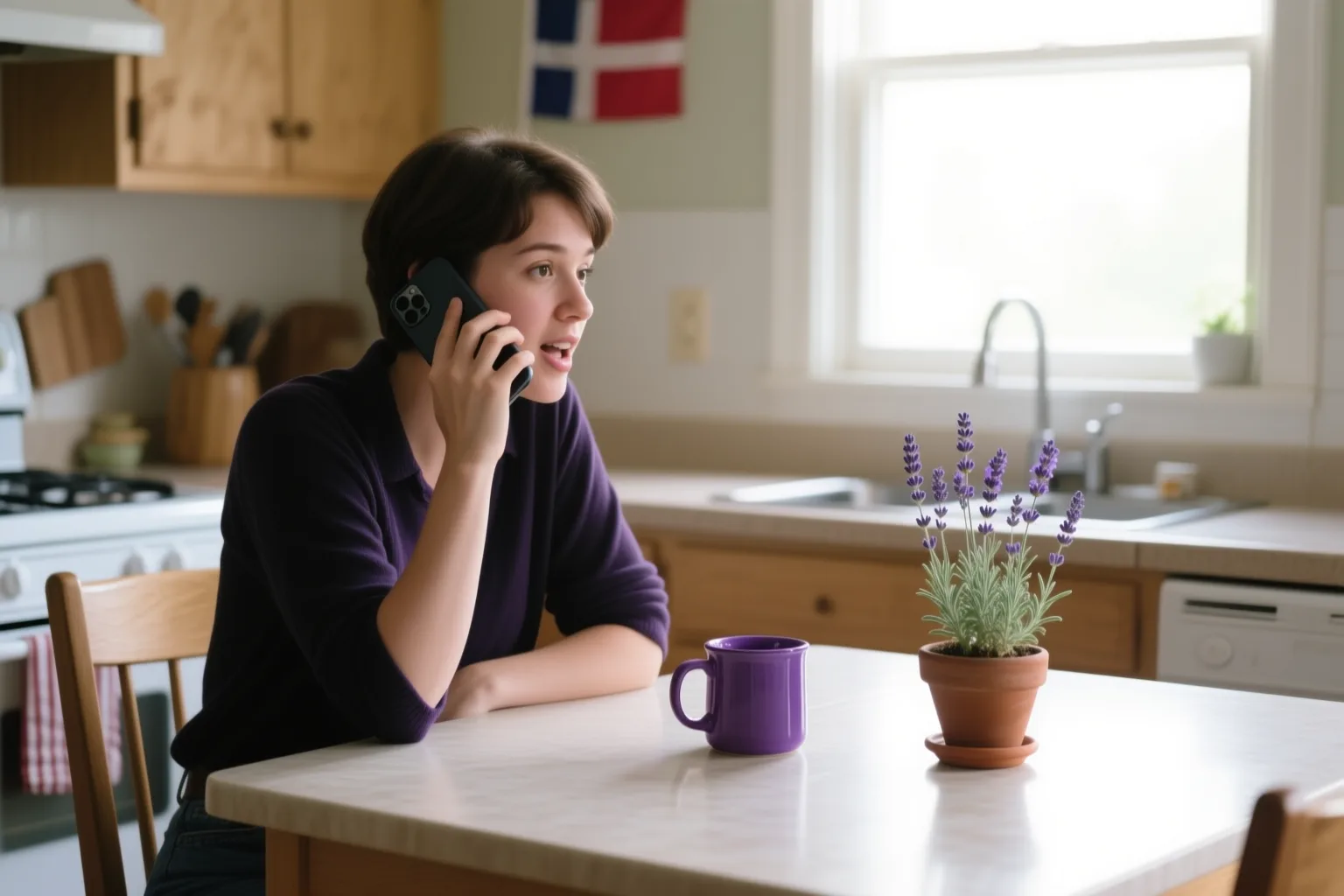
Build a tiny drill you can run while waiting for coffee: pick three purple things you see — una taza morada, una flor violeta, un libro púrpura — and name them aloud. Switch between noun and adjective forms: el color morado, la taza morada. The repetition locks the soft d and the stress patterns into muscle memory. Five minutes of this beats an hour of silent flashcards.
With a Langel
Langel: "Let's practice the color purple in Spanish. Say: Mi mochila es morada."
You: Mi mochila es morada.
Langel: "Good. The d is softer — barely touch your teeth. Try again: mo-RA-tha."
You: Mo-RA-tha.
Langel: "Better. Now use violeta — it doesn't change for gender: Una camiseta violeta."
You: Una camiseta violeta.
Langel: "Perfect. And púrpura stresses the first syllable: PUR-pu-ra. Want to try a full sentence about something purple you own?"
You: Mi coche es morado.
Langel: "Exactly. Five minutes a day, out loud, and the sound sticks."
Frequently asked questions
What is the most common Spanish word for purple?
Morado is the everyday word across most of Spain and Latin America. It works as both noun and adjective and changes for gender: morado, morada, morados, moradas.
When do I use violeta instead of morado?
Use violeta for the bluer, lighter shade of purple. It's common in Argentina, Chile, and Uruguay, and in Spain when you want to specify the spectral hue. As a color adjective it stays invariable: zapatos violeta.
Is púrpura used in daily conversation?
Rarely. Púrpura is formal, literary, or historical — think religious vestments, ancient dyes, or design specs. It stays invariable as a color: tela púrpura.
How do you pronounce the d in morado?
It's a soft th sound (like this but lighter), made by letting the tongue barely touch the back of the upper teeth. Not a hard English d.
Does violeta change for masculine/feminine?
No. As a color adjective, violeta is invariable: un coche violeta, una casa violeta. Only as a noun (la violeta, the flower) does it follow normal gender rules.

Related guides
- AP Spanish conversation practice: how to prepare for the speaking tasks out loudAP Spanish conversation practice is timed, spoken and unscripted. How to train the simulated conversation daily, alone or with a partner who answers.
- How Langels works for Spanish: voice practice that fits your dayLangels gives you a Spanish voice partner who replies in real time, corrects inside the conversation, and remembers what you said last time. Five minutes…
- How to Ask for the Bill in SpanishSay 'La cuenta, por favor' or '¿Me trae la cuenta, por favor?' to ask for the bill in Spanish; both are polite and understood everywhere.